In this article
The Greatest Customer Intelligence “Graph” You’ve Never Seen
FunnelStory’s customer intelligence graph unifies scattered customer signals into a trusted, time-aware context graph—so CS teams can spot risk early, explain why, and act fast with confidence.

By Alok Shukla
Cofounder and CEO
Jan 21, 2026
4 min read
Last Updated: Apr 21, 2026
It’s a Context Graph—and it’s the future of B2B Customer Intelligence.
A VP of Customer Success once told us at FunnelStory, something that sounded like a joke—until I realized it wasn’t:
“Renewals don’t slip because we don’t have data. They slip because we can’t assemble the truth fast enough.”
Then she added: “We lose the thread right after we open the second tab.”
If you run Customer Intelligence, you know the scene. One screen shows CRM fields that are half-right. Another shows product usage that’s technically accurate but contextless. Support has the real story, buried in tickets. Calls have the sentiment, buried in transcripts. Slack has the urgency, buried in threads. And somewhere in the middle is a CSM trying to turn all of that into a plan.
The problem isn’t tooling. It’s context.
Here’s the narrative “deck” that explains why Customer Intelligence is about to change—and why the teams that adopt a Context Graph will win.
1) The Big Change: Customer Context Has Exploded
The world CS was built for is gone.
Back then, you could run a decent renewal process with a CRM, some usage charts, and good relationships. Today, customer reality is distributed across:
product events (often billions of them)
support tickets, incidents, and escalations
call transcripts, stakeholder sentiment, pricing discussions
internal threads and notes
contracts, invoices, renewals, expansions
Meanwhile expectations have jumped. Leaders want proactive churn prevention, measurable value delivery, and faster time-to-value—without adding headcount.
But context isn’t just “more information.” It’s how information connects—who said what, what changed, why it matters, and what it implies for the next step.
2) Winners and Losers: Two Futures for Customer Facing Teams
This shift splits customer-facing teams into two camps.
The losers will keep operating like detectives:
scrambling before QBRs and renewals to reconstruct the story
reacting to escalations after trust is already damaged
debating whose system is “right” (CRM vs product vs support)
leaning on AI that summarizes nicely but can’t prove anything
The winners will operate from a shared, living model of customer reality:
stakeholder maps that stay current (even across identity messiness)
risk signals that are time-aware, not snapshot guesses
analysis that scans all relevant history, not a few pulled notes
recommendations grounded in evidence the team can inspect and defend
Because in high-stakes CS, “probably right” is just another way to say “not usable.”
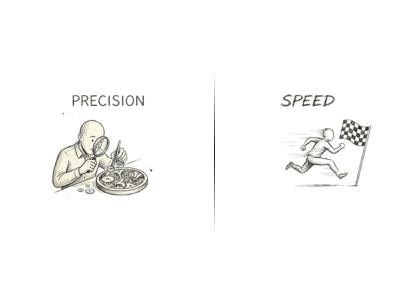
You need auditable precision, not a rush to feel speed.
3) The Promised Land: A Customer Narrative You Can Trust
Imagine if every account had a continuously updated customer narrative—one that answers, instantly and defensibly:
What’s happening? Why is it happening? What should we do next?
In that world:
Risk isn’t a red/yellow/green score. It’s a traceable pattern over time (usage + support + sentiment + stakeholder change).
QBRs aren’t assembled manually. They’re generated from the same underlying truth your team uses every day.
Renewals aren’t “managed.” They’re predicted early and shaped with precision.
AI doesn’t just summarize. It interrogates customer reality with queries—and shows its work.
The point isn’t more automation. It’s more certainty.
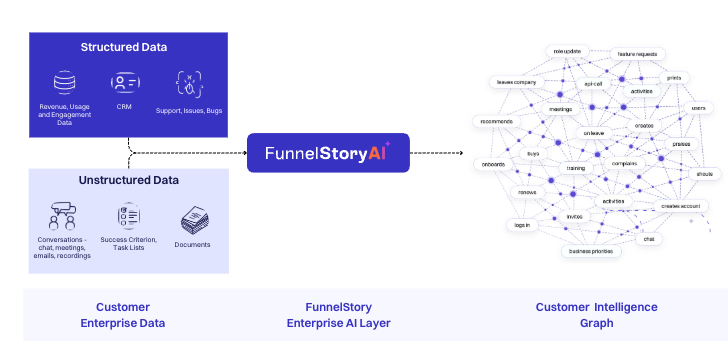
And that is what is the promise of FunnelStory's customer intelligence graph.
4) The Magic Gifts: What a Context Graph Makes Possible
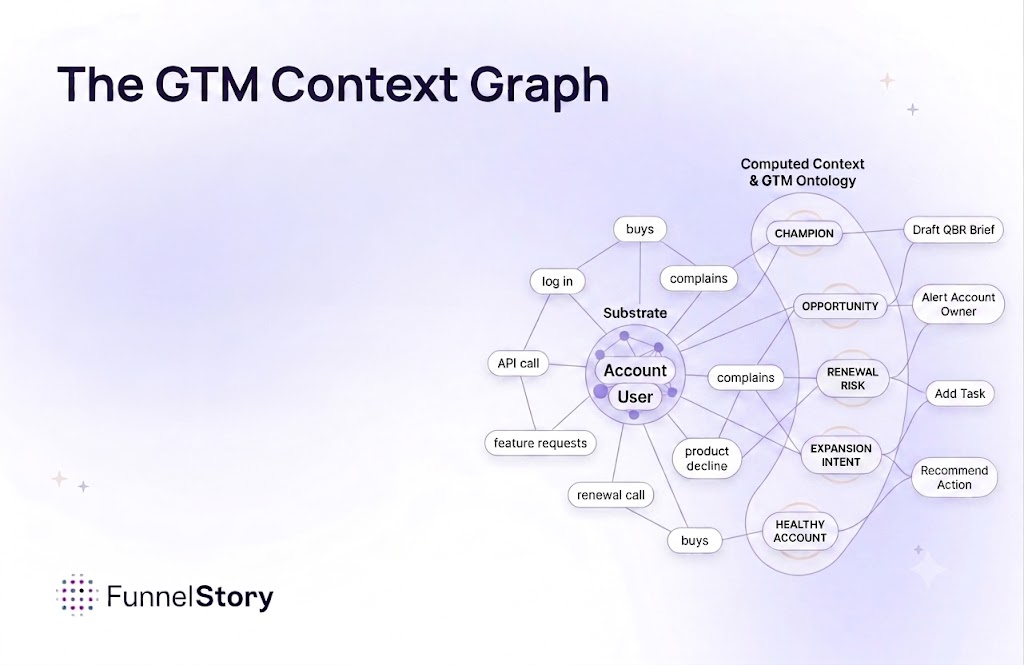
A Context Graph (Customer Intelligence Graph) is a customer-centric system that connects entities, relationships, and events over time—paired with a semantic layer that represents business meaning (health, risk, adoption, value milestones).
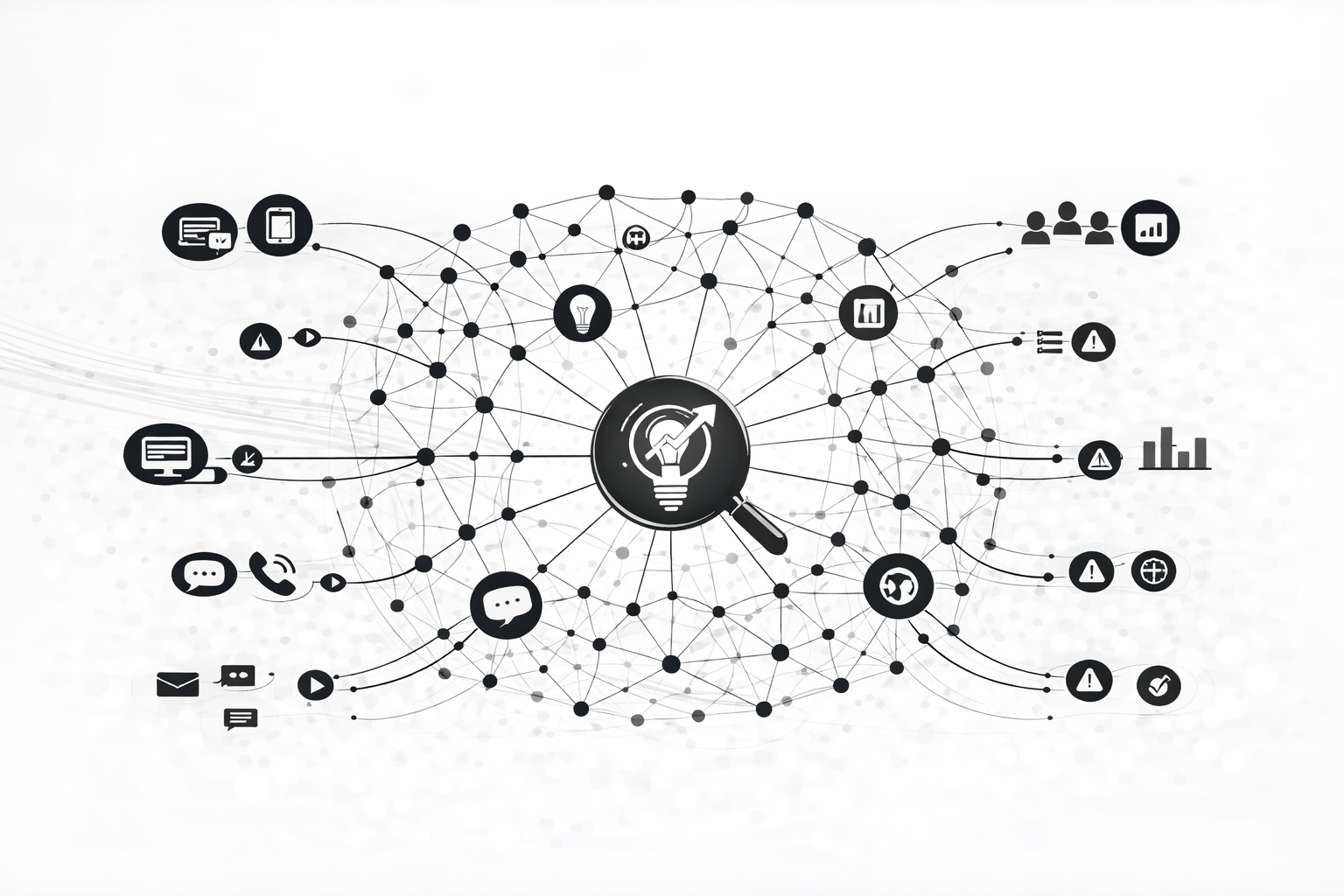
Four capabilities matter most:
Gift 1: Unify messy data from anywhere Customer identity is fragmented: product user IDs, emails, domains, CRM contacts, meeting attendees. A context graph resolves “who is who” so insights aren’t broken by duplicates or gaps.
Gift 2: Turn raw signals into business meaning Raw events don’t answer CS questions. You need derived concepts—health drivers, adoption milestones, blockers, stakeholder influence—defined in your language, for your business.
Gift 3: Query for precision (not vibes) Instead of relying on “a few retrieved documents,” you can ask precise questions: Which accounts match a known risk pattern? What failure modes dominate tickets? What changed in the last 14 days across usage + support + sentiment?
Gift 4: Time-first journey intelligence CS is a time-series game. Patterns matter more than snapshots: rising tickets + declining usage + stakeholder churn + negative sentiment mentions. A context graph makes these patterns visible early.
5) The Proof: Trust Comes From Traceability
The future of customer intelligence isn’t “AI that sounds smart.” It’s AI that’s auditable:
show the signals
show how they connect
show when they changed
make answers reproducible
That’s what earns trust—internally, and with customers.
The Bottom Line
The teams that win won’t be the ones with the most dashboards.
They’ll be the ones who can answer—fast and defensibly—what’s happening, why it’s happening, and what to do next.
That’s what a Context Graph enables. And that’s why it’s the future of Customer Intelligence.